
QUESTION SET · HISTORY AND RESPONSIBILITY
Questions on: The GDR and the Berlin Wall (1949–1990)
21 of the 90 questions on History and responsibility belong here. Under each question you read what it is about; the article explains the wider context.
Read the background: The GDR and the Berlin Wall (1949–1990)
The test is only in German, so the questions are shown in their official German wording.
Question 151 of 300
Wer baute die Mauer in Berlin?
What it is about
The Berlin Wall split the city in two for almost three decades and became a symbol of the division of Europe during the Cold War.
The four answer options and the correct answer are in the app, where you practise with instant feedback.
Further readingBundesregierung: 64. Jahrestag des Mauerbaus
Question 182 of 300
Wie heißt das jüdische Gebetshaus?
What it is about
Jewish communities in Germany maintain their religious traditions. Their holidays follow the Jewish calendar.
More on this topic: Jewish Life in Germany and Antisemitism
The four answer options and the correct answer are in the app, where you practise with instant feedback.
Further readingZentralrat der Juden in Deutschland: Gebet und Gottesdienst
Question 184 of 300
Auf welcher rechtlichen Grundlage wurde der Staat Israel gegründet?
What it is about
After the First World War, the territory of the British Mandate for Palestine was a land with a Jewish and an Arab population. After the Second World War, its future was negotiated internationally.
More on this topic: Jewish Life in Germany and Antisemitism
The four answer options and the correct answer are in the app, where you practise with instant feedback.
Further readingVereinte Nationen: Resolution 181 (II), Future Government of PalestineVereinte Nationen: History of the Question of Palestine
Question 185 of 300
Wofür stand der Ausdruck „Eiserner Vorhang“? Für die Abschottung …
What it is about
The term became known through a speech by the British politician Winston Churchill. The border ran across Europe and separated states with different political systems.
The four answer options and the correct answer are in the app, where you practise with instant feedback.
Further readingBundeszentrale für politische Bildung: Kriegsfolgen
Question 186 of 300
Im Jahr 1953 gab es in der DDR einen Aufstand, an den lange Zeit in der Bundesrepublik Deutschland ein Feiertag erinnerte. Wann war das?
What it is about
The uprising in the German Democratic Republic (GDR; in German: DDR) against the state leadership was crushed by Soviet tanks. Many people were arrested and sentenced.
The four answer options and the correct answer are in the app, where you practise with instant feedback.
Further readingBundesregierung: 70 Jahre Volksaufstand in der DDR
Question 187 of 300
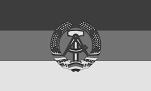
Welcher deutsche Staat hatte eine schwarz-rot-goldene Flagge mit Hammer, Zirkel und Ährenkranz?
What it is about
After the Second World War, two German states emerged. Both chose black, red and gold, the colours of the democratic movement of 1848. From 1959, one of the two states also placed its state coat of arms in the middle of the flag, in order to be visibly distinct from the other.
The four answer options and the correct answer are in the app, where you practise with instant feedback.
Further readingBundeszentrale für politische Bildung: Die Nationalfarben
Question 188 of 300
In welchem Jahr wurde die Mauer in Berlin gebaut?
What it is about
The Berlin Wall was a border system of concrete, watchtowers and barriers that separated West and East Berlin. It stretched for many kilometres through the city.
The four answer options and the correct answer are in the app, where you practise with instant feedback.
Further readingBundesregierung: 64. Jahrestag des Mauerbaus
Question 189 of 300
Wann baute die DDR die Mauer in Berlin?
What it is about
The border installations of the Wall included a death strip and watchtowers; anyone who wanted to flee risked their life. Many people were injured or killed in escape attempts.
The four answer options and the correct answer are in the app, where you practise with instant feedback.
Further readingBundesregierung: 64. Jahrestag des Mauerbaus
Question 190 of 300
Was bedeutet die Abkürzung DDR?
What it is about
The state in the east of Germany belonged to the socialist camp in Europe and had its capital in the eastern part of Berlin.
The four answer options and the correct answer are in the app, where you practise with instant feedback.
Further readingBundeszentrale für politische Bildung: DDR
Question 193 of 300
Von 1961 bis 1989 war Berlin …
What it is about
After the Second World War, Berlin was divided into four sectors. The eastern part belonged to the German Democratic Republic (GDR; in German: DDR), while the western sectors were closely tied to the Federal Republic. More and more people fled the GDR via West Berlin. For this reason, the GDR leadership had a border installation built across the city in August 1961. It was not opened until November 1989.
The four answer options and the correct answer are in the app, where you practise with instant feedback.
Further readingBundesregierung: Die Mauer ist offenBundesregierung: 64. Jahrestag des Mauerbaus
Question 199 of 300
Mit der Abkürzung „Stasi“ meinte man in der DDR …
What it is about
The Stasi still plays a major role today in coming to terms with the history of the German Democratic Republic (GDR; in German: DDR), and its files are accessible to those affected.
The four answer options and the correct answer are in the app, where you practise with instant feedback.
Further readingBundesarchiv: Was war die Stasi?
Question 202 of 300
Zu wem gehörte die DDR im „Kalten Krieg“?
What it is about
In the Cold War, the states of Europe formed two opposing camps, each led by a superpower, which faced each other militarily.
The four answer options and the correct answer are in the app, where you practise with instant feedback.
Further readingBundeszentrale für politische Bildung: Vor 25 Jahren – Ende des Warschauer Paktes
Question 203 of 300
Wie hieß das Wirtschaftssystem der DDR?
What it is about
The economy was closely tied to the policy of the single ruling party. The country belonged to the socialist bloc of states in Europe.
The four answer options and the correct answer are in the app, where you practise with instant feedback.
Further readingBundeszentrale für politische Bildung: Planwirtschaft
Question 207 of 300
In welchem Militärbündnis war die DDR Mitglied?
What it is about
In the 20th century, military alliances served mutual defence and bound their members to one another by treaty. Their members committed themselves to help one another if one of them was attacked.
The four answer options and the correct answer are in the app, where you practise with instant feedback.
Further readingBundeszentrale für politische Bildung: Die Geschichte der NATO und ihrer Mitglieder
Question 208 of 300
Was war die „Stasi“?
What it is about
The building of the Stasi in Berlin's Normannenstraße is now a museum and commemorates the work of the agency.
The four answer options and the correct answer are in the app, where you practise with instant feedback.
Further readingBundeszentrale für politische Bildung: Staatssicherheitsdienst
Question 209 of 300
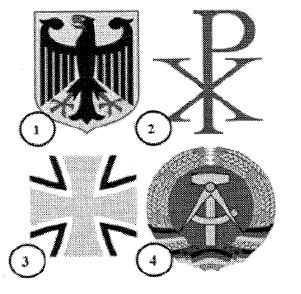
Welches war das Wappen der Deutschen Demokratischen Republik?
What it is about
In the 1950s, the German Democratic Republic (GDR; in German: DDR) gave itself its own state coat of arms. It was meant to show whom the state, by its own understanding, relied on: the workers, the farmers and the intelligentsia. It disappeared with reunification in 1990; today it is seen mainly in museums and on old documents.
The four answer options and the correct answer are in the app, where you practise with instant feedback.
Further readingBundeszentrale für politische Bildung: Bundeswappen
Question 210 of 300
Was ereignete sich am 17. Juni 1953 in der DDR?
What it is about
In the early years of the German Democratic Republic (GDR; in German: DDR), supply shortages and high work quotas noticeably burdened the everyday lives of many people. The economy of the GDR was under strong political pressure.
The four answer options and the correct answer are in the app, where you practise with instant feedback.
Further readingBundeszentrale für politische Bildung: Aufbau eines sozialistischen Staates
Question 212 of 300
Wie heißt Deutschland mit vollem Namen?
What it is about
A state's official name is found in its constitution and on official documents, for example in the passport. It often describes how the state is structured: whether a king or an elected head of state is at the top, and whether several states together form one country.
More on this topic: Flag, coat of arms and anthem: the symbols of Germany
The four answer options and the correct answer are in the app, where you practise with instant feedback.
Further readingBundesministerium der Justiz: Grundgesetz für die Bundesrepublik Deutschland
Question 214 of 300
Welche Farben hat die deutsche Flagge?
What it is about
The federal flag is enshrined in the Basic Law (Grundgesetz) and is displayed by federal authorities on official occasions. It is regarded as a national symbol of Germany.
More on this topic: Flag, coat of arms and anthem: the symbols of Germany
The four answer options and the correct answer are in the app, where you practise with instant feedback.
Further readingBundesministerium der Justiz: Grundgesetz für die Bundesrepublik Deutschland
Question 216 of 300
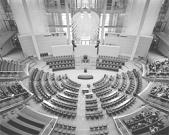
Welches Symbol ist im Plenarsaal des Deutschen Bundestages zu sehen?
What it is about
In the plenary chamber of the Federal Parliament (Bundestag), in the Reichstag building in Berlin, a large state emblem of the Federal Republic hangs behind the speaker's lectern. Because of its rounded shape, many people jokingly call it the “fat hen”. It is meant to show that the parliament of the whole state meets here.
More on this topic: Flag, coat of arms and anthem: the symbols of Germany
The four answer options and the correct answer are in the app, where you practise with instant feedback.
Further readingDeutscher Bundestag: Plenum
Question 217 of 300
In welchem Zeitraum gab es die Deutsche Demokratische Republik (DDR)?
What it is about
The German Democratic Republic (GDR; in German: DDR) was a socialist state. It was led by the Socialist Unity Party of Germany (SED), and its power reached deep into people's everyday lives.
The four answer options and the correct answer are in the app, where you practise with instant feedback.
Further readingBundeszentrale für politische Bildung: Die Etappen der Entwicklung von 1945 bis 1990
Do you know the answers?
In the app you practise all 310 questions of your test with instant feedback, explanations and an exam simulation.